
Construction Machinery Market in Indonesia 2026: Opportunities, Challenges and Success Strategies for Manufacturers
Indonesia’s construction machinery market is entering a dynamic growth phase in 2026 — offering major opportunities for Chinese, Japanese, European and US manufacturers ready to adapt to local realities. This in-depth series explores market drivers, competitive dynamics, legal frameworks, logistics hurdles and implementation strategies across the archipelago. From surging demand driven by IKN Nusantara, toll roads and mining projects to the critical importance of service excellence, cultural intelligence and localization, discover what it takes to succeed in one of Southeast Asia’s most promising yet complex heavy equipment markets. Learn how to position your machines, build resilient distribution and service networks, master regulatory incentives and turn market entry into sustainable long-term profitability.
CONSTRUCTION MACHINERY
Agatha Nova Damayanti
5/3/20266 min read
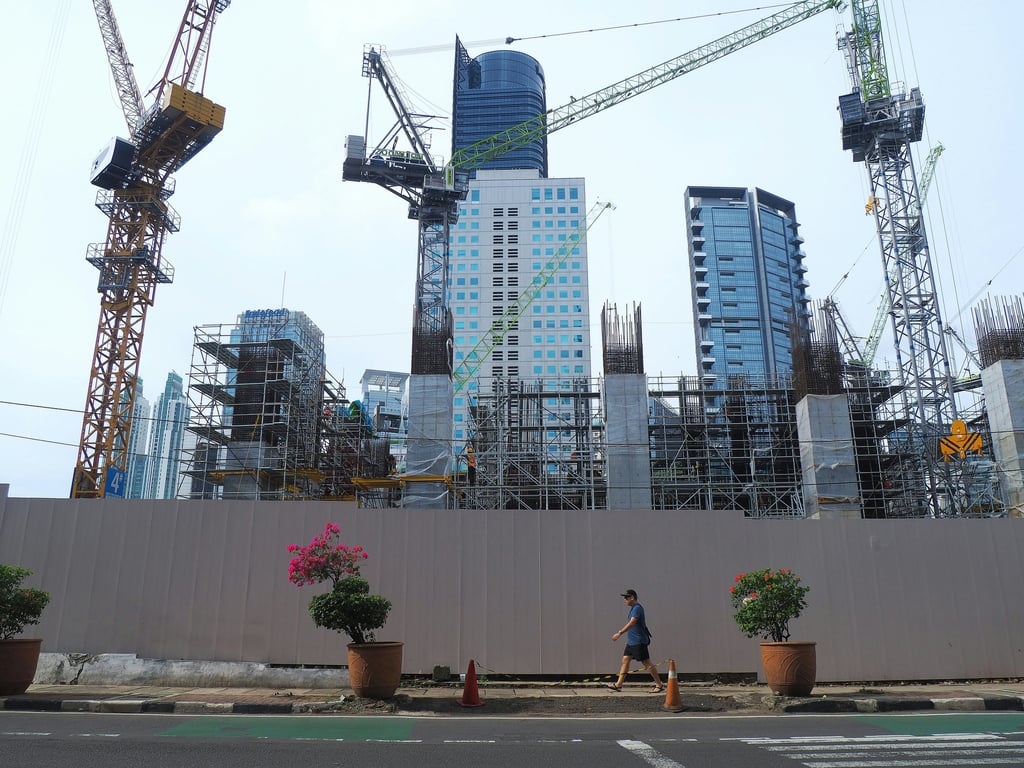
A) Why Indonesia’s Construction Machinery Market Offers Outstanding Opportunities in 2026 – and How Chinese as well as other International Manufacturers Can Position Themselves for Success
Indonesia’s construction machinery market is entering a dynamic growth phase in 2026, presenting compelling opportunities for manufacturers looking to expand in Southeast Asia’s largest economy. With a population exceeding 280 million, rapid urbanization, massive infrastructure ambitions including the new capital Nusantara (IKN), and strong government investment in National Strategic Projects, the country is driving sustained demand for compact, versatile, and robust equipment suited to both dense urban developments and challenging rural/frontier terrains.
The market stands out through its dual character: SME contractors, who handle the majority of projects, need affordable, easy-to-maintain machines that improve efficiency and reduce labor dependency, while large-scale infrastructure initiatives create opportunities across earthmoving, material handling, and specialized applications. Import patterns show clear potential for Chinese suppliers with cost-competitive compact and medium-sized models, alongside strong prospects for Japanese, European, and US manufacturers offering precision technology, durability, sustainability features, and advanced digital solutions.
Key tailwinds include ongoing labor shortages, rising mechanization needs, policy support for infrastructure modernization, and a gradual shift toward greener and smarter equipment. Indonesia’s diverse ecosystems — from high-density urban corridors in Java to remote outer islands — require tailored solutions that balance affordability, reliability, and adaptability. This environment rewards manufacturers who understand local contractor realities, logistics challenges in an archipelagic nation, and the growing importance of service networks and financing models.
B) Competition in Indonesia’s Construction Machinery Market 2026: Who Wins in the Small and Medium Segment – and How New Entrants Can Succeed
Indonesia’s small and medium-sized construction machinery market is moderately fragmented and highly dynamic in 2026, offering attractive entry opportunities for both established players and ambitious newcomers. Multinational OEMs such as Caterpillar, Komatsu (via United Tractors), Hitachi, and Volvo CE lead the premium and mid-tier segments with advanced telematics, hybrid/low-emission technologies, predictive maintenance, and comprehensive after-sales ecosystems — particularly valued in urban infrastructure and high-spec projects. At the same time, local distributors, importers, and Chinese manufacturers (SANY, XCMG) dominate the price-sensitive SME and contractor space through competitive pricing, rapid spare-parts availability, flexible financing, and strong localized service networks.
Rental operators and service providers play a crucial intermediary role, enabling shared-use models that lower capital barriers for small-to-medium contractors and extend equipment reach across diverse project types. Java and urban corridors show higher demand for tech-integrated compact machines suited to dense sites, while rural, mining, and outer-island regions favor robust, low-maintenance, and affordable solutions adapted to challenging terrains and variable project scales.
Competition extends far beyond price: success increasingly depends on reliability, total cost of ownership, service speed, operator training, and the ability to build trust through consistent support and partnerships with rental fleets and cooperatives. New entrants who combine versatile compact equipment with strong localized after-sales networks, flexible financing options, and clear demonstrations of uptime and efficiency gains can carve out sustainable positions in this SME-dominated market.
C) Legal and Economic Framework for Construction Machinery in Indonesia 2026: Opportunities and Hurdles for Foreign Manufacturers
Indonesia offers foreign manufacturers of construction machinery a structured yet dynamic legal and economic framework in 2026. The Positive Investment List allows up to 100% foreign ownership in priority sectors such as infrastructure development, mining support, and heavy equipment manufacturing. At the same time, the Omnibus Law on Job Creation, RPJMN 2025–2029 infrastructure targets, tax holidays (up to 100% CIT reduction for 5–20 years on qualifying investments), investment allowances, and import duty exemptions for capital goods create strong incentives for mechanization and localization.
Special Economic Zones (SEZs) and the new capital Nusantara (IKN) provide enhanced packages including zero-rated VAT, bonded-zone facilities, and extended land rights. These measures particularly benefit Chinese manufacturers through cost-competitive CKD assembly and Japanese, European, and US suppliers with advanced technology and sustainability features. Policy support for infrastructure expansion, public-private partnerships, and green incentives for low-emission equipment opens clear entry pathways.
Non-tariff measures (SNI certification, import licensing, TKDN local content requirements), bureaucratic processes through the OSS-RBA system, and regional differences (Java vs. outer islands) increase compliance costs and timelines. Successful market entry rewards manufacturers who pursue early SNI compliance, joint ventures or CKD partnerships, transparent processes, and alignment with national infrastructure priorities.
D) Logistics and Infrastructure for Construction Machinery in Indonesia 2026: Opportunities and Challenges for Market Entry
Indonesia’s vast archipelago, with its booming infrastructure push and resource-rich landscapes, presents a compelling yet complex arena for construction machinery manufacturers. From massive toll-road corridors and the ambitious new capital IKN Nusantara to expanding mining operations and port developments, demand for excavators, loaders, bulldozers, cranes, and heavy transporters is surging. Yet entering this market means navigating a unique blend of geographic fragmentation, tropical extremes, and evolving digital and logistical realities that can make or break operational success.
Picture this: heavy equipment unloading at Tanjung Priok under humid skies, then facing the challenge of reaching remote project sites where roads turn challenging and connectivity flickers. Freight routes from major origins tell a tale of sharp contrasts—short, stable intra-Asia connections versus longer, more volatile trans-ocean hauls influenced by global disruptions. Port dynamics, inter-island movements, and hinterland access add layers that reward those who plan cleverly.
Layer on the climate: consistent high heat and humidity paired with intense seasonal rains and variability that test every component, from hydraulics to electronics. These conditions don’t just raise maintenance needs—they demand thoughtful design adaptations if machines are to deliver uptime during critical project windows. Indonesia’s transport backbone shows impressive momentum through expanding expressways, maritime highways, and strategic projects, yet stark regional differences persist. Java often enjoys better connectivity, while outer regions highlight the realities of archipelagic logistics. Add multi-hazard risks—seismic events, volcanic activity, floods, and landslides—that can cascade through supply chains and sites with little warning, and the operational picture becomes clear: resilience isn’t optional.
On the brighter side, local production avenues are opening through Special Economic Zones, incentives for CKD assembly, and industrial clusters that support component manufacturing and customization. Technological infrastructure is advancing too, with fiber backbones, satellite coverage, and digital initiatives that hint at smarter integration of IoT, BIM, and automation—though gaps remain, especially beyond urban cores.
What separates winners in this market? Understanding how these elements interact: cost-effective sourcing paired with smart localization, climate-aware engineering, risk-aware deployment, and partnerships that bridge infrastructure divides.
E) Implementation and Differentiation in Indonesia’s Construction Machinery Market 2026: From Product to Integrated Solution
Indonesia’s construction machinery market rewards manufacturers who move beyond supplying equipment to delivering reliable, localized, and relationship-driven solutions that align with the country’s massive infrastructure ambitions. With ongoing megaprojects like IKN Nusantara, extensive toll-road expansions, port upgrades, and growing mining activities, demand for excavators, loaders, bulldozers, cranes, and heavy transporters is robust and sustained. Success hinges on navigating a complex environment shaped by geographic spread, operational realities, and the importance of trust in business relationships.
The market favors players who build strong distribution reach across Java’s dense networks and the more challenging outer islands, where logistics and service become decisive. Workforce dynamics in a fast-growing sector highlight both opportunities from a young labor pool and persistent needs for practical skills development in operation, maintenance, and modern technologies. Sustainability expectations are rising, influenced by national targets and procurement preferences that increasingly value lower-impact and efficient solutions.
Cultural nuances play a central role: high-context communication, respect for hierarchy, consensus-building, and relationship orientation mean that transactions often depend more on demonstrated reliability and personal trust than on specifications alone. Gotong royong values and community expectations further emphasize the importance of contributing beyond business, whether through skills programs, local partnerships, or visible support in project areas.
Sales and service channels thrive on a mix of established dealer networks, logistics partnerships, and hybrid approaches that blend digital tools with on-the-ground presence. Identifying the right local collaborators — from industrial cluster players to specialized logistics providers — can accelerate market access and after-sales effectiveness. High service quality, including responsive support and practical training, often determines long-term success and customer loyalty in an industry where downtime directly impacts project timelines.
Strategic differentiation emerges through thoughtful implementation: combining cost-effective sourcing with local adaptation, investing in service infrastructure that respects regional differences, and engaging communities in ways that build genuine acceptance. While Chinese-origin suppliers frequently excel on affordability and availability, suppliers from Japan, Europe, and the US can stand out with durable, technology-enhanced offerings and stronger emphasis on long-term partnership and support.
Understanding the bigger picture often requires going beyond a single article. That’s why we’ve developed a series of Insight Reports—carefully crafted to provide in-depth analysis, practical frameworks, and actionable takeaways you can apply immediately.
Discover more through the link below, or browse the reports currently available in the catalogue.
Company
© 2026. All rights reserved.
Strategic Thinking. Practical Results.
Resources
Contact
Denpasar, Bali, Indonesia






PT. SEANOHA BUSINESS PARTNER
Registered in Indonesia
Business Registration (NIB): 1905260020924